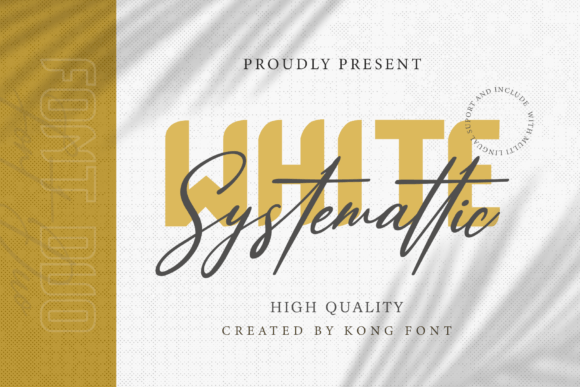
White Systemattic: A Fresh Handwritten Font for Small Business Branding
A Bakery’s Packaging Upgrade with White Systemattic
While helping a local bakery refresh their packaging, we needed a font that felt warm, personal, and just a little playful. The owner wanted to move away from generic script fonts and find something that matched the care and creativity that went into each pastry. That’s when I tried White Systemattic. This modern handwritten script font brought a level of polish and personality that the previous design was missing. It’s part of the Freebies category, and the free version includes the regular and italic styles—perfect for small businesses on a budget.
What Makes White Systemattic Unique
White Systemattic Duo is a clean, modern take on the handwritten script. It’s not overly ornate like some calligraphy fonts, but it still carries a human touch that feels inviting. The font’s strokes have a soft bounce, and the letterforms flow naturally, making it ideal for businesses that want to feel approachable yet professional. Whether used for a logo, product label, or social media graphic, it adds a sense of authenticity and warmth.
It’s especially effective for short phrases, headlines, and display text. Because of its stylized nature, it works best at medium to large sizes. For smaller print elements like ingredient labels or fine print on packaging, I recommend pairing it with a clean sans serif font to maintain readability while keeping the visual hierarchy strong.
Real-World Uses for White Systemattic
We used White Systemattic on the bakery’s custom box labels, thank-you tags, and Instagram story templates. On the packaging, it gave the brand a boutique-level finish. The italic version was perfect for a “Handmade with Love” sticker that went on each box. In digital use, it looked great on Instagram carousel headers and online shop banners—helping the bakery feel more cohesive and memorable across platforms.
- Logo Design: A great fit for brands that want a custom, approachable look without paying for a premium font.
- Packaging: Works well on product tags, food labels, and handmade packaging.
- Business Cards: Adds a personal touch to small business stationery.
- Social Media: Ideal for headlines, quote graphics, and promotional posts.
It also performed well on a local candle brand’s label redesign, where a sense of craftsmanship and warmth is key. The font gave their product a more premium feel without being overly formal.
How Typography Builds a Stronger Brand
Typography is more than just picking a pretty font. It’s about creating a visual language that customers instantly recognize. A well-chosen typeface like White Systemattic can make your brand feel consistent, trustworthy, and easy to remember. When every piece of your branding—from your packaging to your website—uses the same thoughtful font choices, it builds a stronger, more professional image.
White Systemattic, with its clean and modern script style, helps small businesses communicate authenticity and care. It’s a great example of how a free font can punch above its weight when used intentionally and strategically.
Font Pairing Tips for White Systemattic
Since White Systemattic is a script font, it pairs best with simpler, more structured fonts. Here are a few pairing ideas that worked well in our branding projects:
- With a Clean Sans Serif: For body text or secondary information. Think Montserrat, Lato, or Open Sans.
- With a Minimal Serif: For a more elegant contrast, especially in logo or editorial-style layouts.
- With a Second Script Font: Use sparingly—pair it with a different script font for a layered, handcrafted look.
When pairing, always test readability. For example, if you’re using White Systemattic on a small sticker, keep the supporting text in a simple, legible font so the message isn’t lost.
Things to Check Before Using White Systemattic
Before using White Systemattic for your business, make sure to review the font’s included styles, file formats, and licensing. The free version includes regular and italic, which is great for many uses, but if you need bold or alternate characters, you may need to upgrade to a premium version or find a complementary font.
Also, check for multilingual support and ligatures—especially if your brand uses special characters or multiple languages. And always confirm that the font license allows for commercial use, especially if you’re applying it to product packaging, merchandise, or client work.